

A New European Funding Architecture After 2027
The European Union is preparing a major change in the way EU funds will be organised after 2027. Agriculture, regional development, employment and other policy areas are expected to be financed through a common framework, giving Member States greater flexibility in setting priorities and coordinating investments.
For Romania, this change could represent an important opportunity to adopt a more integrated approach to rural development, particularly in a context where rural and urban economies are deeply interconnected, and investments in agriculture, infrastructure, education, services and local economies reinforce one another.
Rural–Urban Disparities: A Major Challenge for Romania
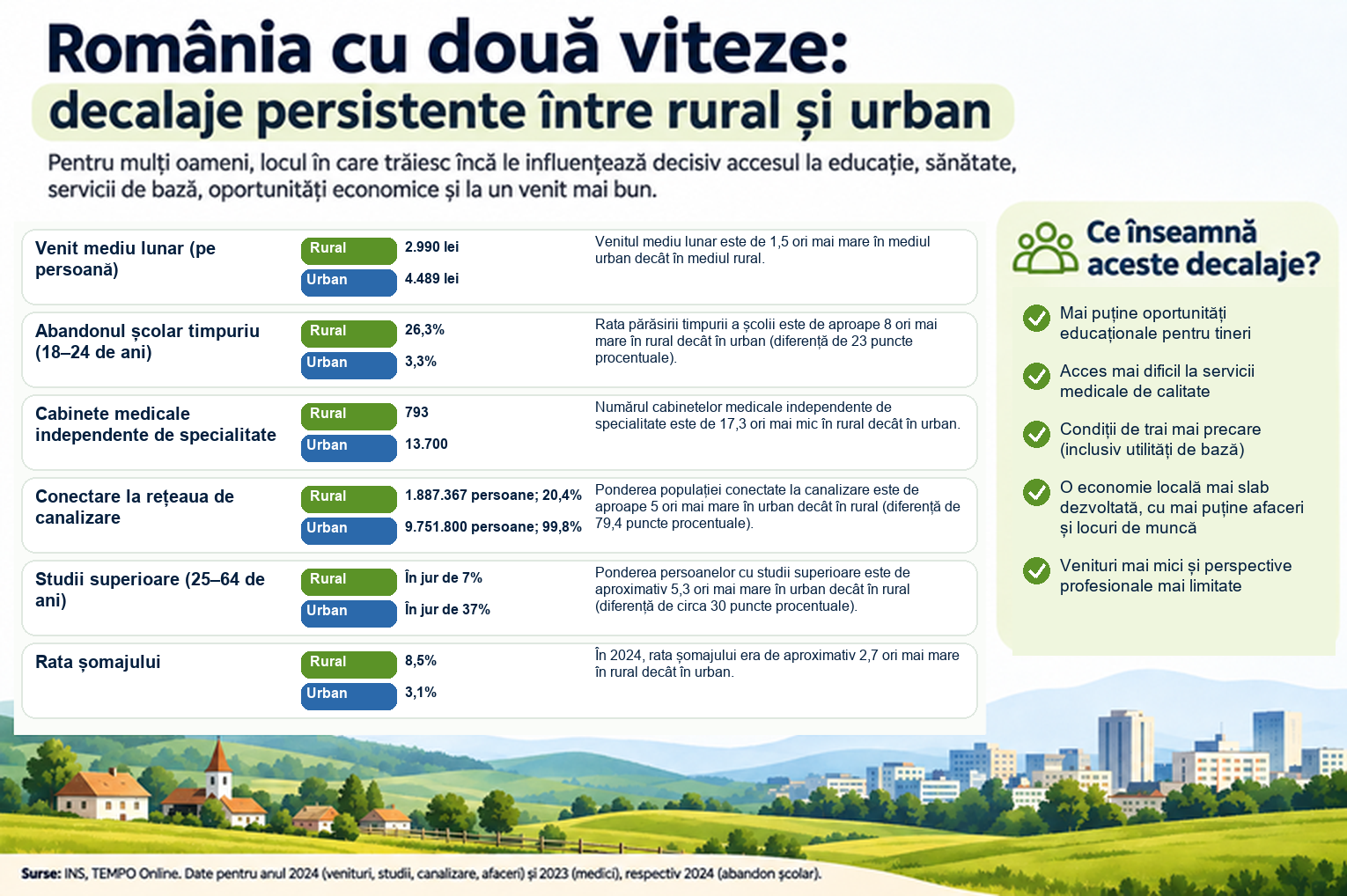
At the same time, Romania faces significant disparities between rural and urban areas. Average monthly income per person stands at approximately RON 2,990 in rural areas, compared to RON 4,489 in urban areas. The early school leaving rate is almost eight times higher in rural areas, while access to healthcare, infrastructure and economic opportunities continues to vary considerably.
In its proposal for the next EU budget, the European Commission introduces a minimum target of 10% of the relevant resources under the new National and Regional Partnership Plans to be allocated to rural development. This represents an important starting point, but its impact on rural communities will depend on how priorities are defined, investments are selected and results are monitored.
What the New EU Funding Framework Means for Rural Development
In its latest policy paper, CRPE examines the implications of this new funding architecture for rural development in Romania, against the backdrop of ongoing European debates on the future of rural financing. The analysis pays particular attention to agricultural cooperatives, whose investment needs and challenges in accessing finance have been documented through research conducted by CRPE and its CoopNet partners, as well as to the LEADER instrument, which enables local communities to participate directly in setting their development priorities.
The paper explores both the opportunities offered by more coherent investment planning and the challenges related to the territorial distribution of funds, access to financing for smaller beneficiaries, and the capacity of rural communities to harness their economic potential.
CRPE’s Recommendations for the Future of Rural Funding
Based on these considerations, CRPE puts forward a series of recommendations for the EU negotiations and the preparation of Romania’s future National and Regional Partnership Plan: a dedicated chapter on rural development, a more ambitious financial target than the EU minimum, territorial monitoring of investments, safeguarding LEADER funding, and financial instruments tailored to agricultural cooperatives. Investments in education, public services and local economies, alongside the involvement of rural communities from the earliest stages of planning, are equally important.
The key challenge for Romania is to make use of the flexibility offered by the new European funding architecture to develop investments that better reflect local needs and accelerate the reduction of rural–urban disparities.
Read the full policy paper: Rural Development in Romania under the EU Budget 2028–2034: How Can We Seize the Opportunities of the New Funding Architecture Without Deepening Rural–Urban Disparities?
This publication was produced by CRPE as part of the CoopNet 4.0 – Strengthening the Autonomy and Impact of Agricultural Cooperatives in Romania project, implemented in partnership with the Civitas Foundation for Civil Society Cluj, with the support of the Romanian-American Foundation.