Helping young people understand how environmental decisions are made
Center for Research and Advocacy in European Affairs (CRAE) implements in the period february – december 2026 the project “Cross-Border Civic Resilience Through Gamified Democratic Education for Youth”, funded by the Swedish Ministry for Foreign Affairs and the German Marshall Fund of the United States.
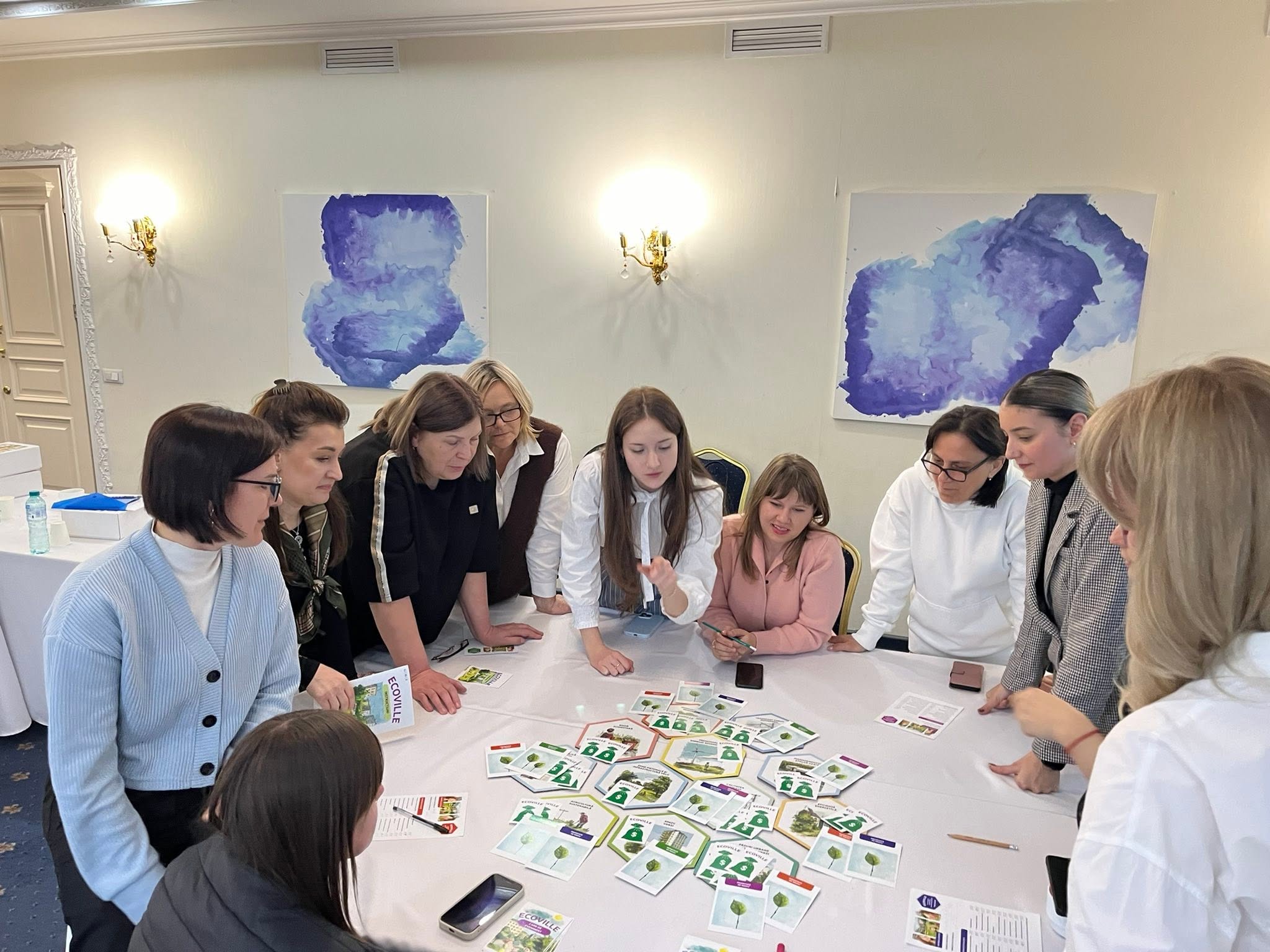
The project will introduce young people in Moldova and Armenia to the links between environmental challenges, local governance and democratic participation. Through a series of learning sessions, both online and in_situ, and using educational boardgames such as Ecoville, participants will explore environmental issues that directly affect their communities and learn how decisions about these issues are made at the local level. We aim to use climate change as an engaging entry point to strengthen democratic values and the rule of law.
Rather than treating civic education as a theoretical subject, the project will connect it to environmental challenges that young people can identify in their own communities. The aim is to help participants understand both the problems their communities face and the democratic mechanisms available to address them.
Learning local democracy through interactive sessions
A total of 600 young people from Moldova and Armenia will participate in 20 online learning sessions, complemented by 20 in-person workshops delivered through participating schools and youth organisations. A civic toolkit will support the learning process and provide young people and educators with practical resources for further engagement.
During the workshops, participants will take on the roles of local councillors and other community stakeholders and work through simulated decisions about the future development of a fictional city. They will have to consider different priorities, interests and constraints while making choices that can affect the environment and quality of life in their community.
Through these simulations, young people will be able to explore questions such as: What environmental priority should a city prioritise? How should limited resources be allocated? What are the environmental consequences of different decisions? How can different interests be balanced? And how can citizens influence local policy?
This approach will help participants understand that environmental challenges are also governance challenges. Addressing issues such as waste, green spaces, transport or urban development requires not only awareness of the problem, but also informed decisions, negotiation between different interests and meaningful citizen participation.
To ensure that the methodology can be used beyond the project, at least 20 educators and youth workers — 10 in each country — will be trained to facilitate the Ecoville exercises. 40 sets of the game will be distributed to participating schools and youth organisations.
Turning civic knowledge into community solutions
The project will then move from simulation to real-life local challenges. Following the online sessions and Ecoville workshops, young people will identify environmental issues affecting their own communities and consider how these could be addressed through local action.
Participants will work in teams to develop a total of 20 action plans addressing environmental problems at the local level. The plans will require young people to move beyond identifying problems and think through possible solutions, relevant stakeholders, available resources and the steps needed to turn an idea into action.
In this way, the project will connect the different stages of learning: young people first gain an understanding of environmental and democratic issues, then experience local decision-making through Ecoville, and finally apply this knowledge to challenges in their own communities.
The most relevant and feasible proposals will be selected for further support, with 6 initiatives implemented at community level. The implementation of these initiatives will provide an opportunity to test whether young people can translate increased civic knowledge into forms of local participation and environmental action.
From local environmental challenges to shared civic solutions
The project will also bring together young people from Moldova and Armenia to exchange experiences about the environmental challenges affecting their communities and to explore how young people can contribute to local decision-making. The cross-border civic marathon will be the main space for this exchange. Participants will work together, compare local experiences and develop solutions to environmental challenges identified in their communities. Two regional online events will complement the marathon and create additional opportunities for exchange between young people, educators and youth workers.
The cross-border dimension is intended to show that while environmental challenges may be specific to individual communities, many of them are shared across countries, and that young people can learn from approaches developed elsewhere.
The project “Cross-Border Civic Resilience Through Gamified Democratic Education for Youth” aims to strengthen civic participation and increase knowledge about democracy and the rule of law among young people in the Republic of Moldova and Armenia. The proposed activities address topics that are relevant to young people, such as environmental protection and climate change, encouraging debate and civic engagement.
The project is coordinated by the Center for Research and Advocacy in European Affairs (Republic of Moldova) together with the Armavir Development Center (Armenia).
Project implemented with the financial support of the Swedish Ministry for Foreign Affairs and the German Marshall Fund of the United States. The project is the sole responsibility of its implementers and does not necessarily reflect the views of the Swedish MFA or GMF.