What does “fair” mean to the citizens?
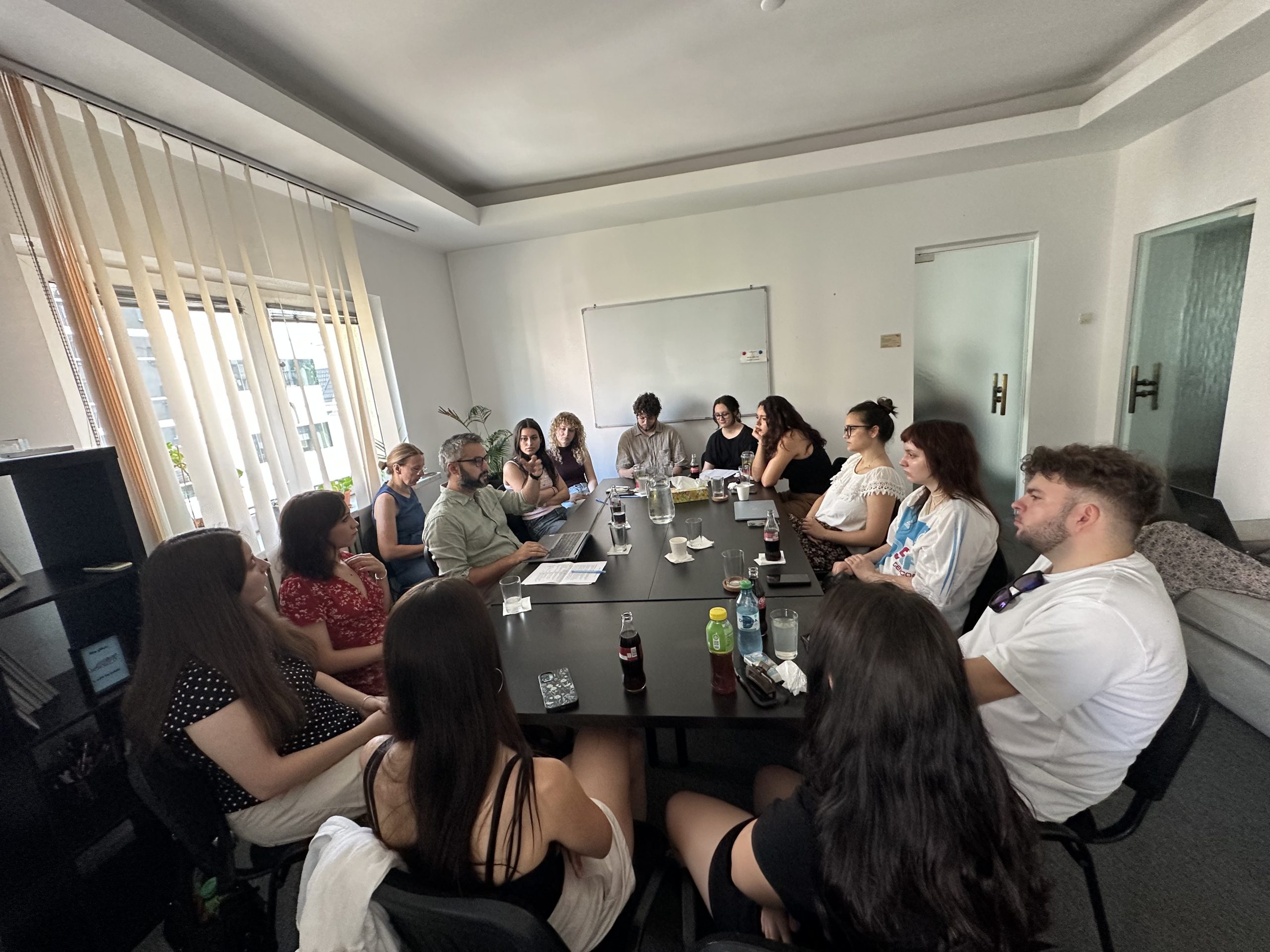
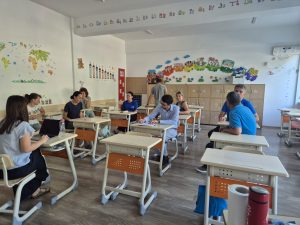
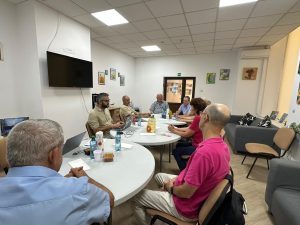
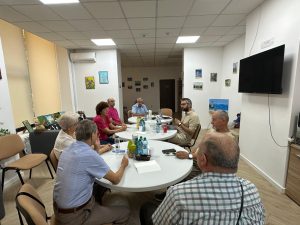
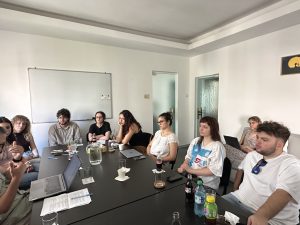
As part of the BUILD FAIR project, CRPE organised four focus groups in Bucharest and Focșani, between June and August 2026, with participants of different ages and from different backgrounds, to find out how citizens view two EU policies that are already changing the way administration and society function: the Digital Decade and the Pact on Migration and Asylum. We started these discussions with a simple question: What is (un)fair for people when these policies are put into practice?
The scenarios were designed around several key dilemmas:
Main dilemma 1: When digital public services exist, but people cannot really use them for multiple reasons (lack of digital skills, systems that transfer bureaucracy from analogue to digital, lack of support, lack of trust in public institutions, fear of making mistakes, or the use of analogue services also as forms of social interaction)
Main dilemma 2: What does fair solidarity mean when we talk about the Pact on Migration and Asylum from the perspective of countries at the EU’s borders, those with lower migratory flows, as well as asylum seekers?
The discussions were open and constructive. Participants did not reject either digitalisation or European migration policies. On the contrary, they identified numerous benefits and spoke about the need for efficiency, but insisted that policies must take into account people who do not have the same resources, skills or information. For participants, fairness means not only equal rules for everyone, but also real access, support, responsibility and patience.
Digitalisation: if we move bureaucracy online, it does not mean we have simplified it
In the case of digital public services, participants clearly identified the advantages: fewer trips, the possibility of dealing with things from home, and faster services when systems work. But they also identified a key problem: digitalisation does not automatically mean simplification. In many cases, their impression is that the bureaucracy at the service counter has simply been moved online.
For people with more limited digital skills, particularly some of the older participants, the difficulties are even greater. But the problems are not limited to digital skills: participants spoke about websites that are difficult to use, systems that do not work, appointments that fail, the inability to track an appointment, the lack of clear information, and fear of fraud or making mistakes. They expect authorities to take greater responsibility: simpler interfaces, human support, the possibility of speaking to an operator and, above all, keeping offline alternatives available. One participant summed up this expectation very well: “Both: online service, but also analogue for those who struggle.”
The need to integrate specific support for those facing additional difficulties was also discussed: migrants who do not speak Romanian and need an international language, or people with disabilities who need adapted interfaces.
Migration and asylum: solidarity, but also perceptions strongly influenced by (mis)information
In discussions about the Pact on Migration and Asylum, participants spoke about the need for solidarity both towards people arriving in the EU and among European states, but opinions were more diverse and contradictory than in the case of digitalisation. Some considered it fair for migrants to have access to support, housing, basic services, work and language courses and supported a fairer sharing of responsibility among EU countries. Other participants emphasised migrants’ responsibilities to integrate, learn the language and find a job, or were more sceptical about relocation and the level of support provided.
Differences of opinion were strong across groups (depending on age, education, place of residence or contact with people from other cultures), but were also affected by what information participants had about migration and the sources it came from: perceptions were more easily influenced by news, social media, personal stories or stories from people they knew, prejudices and disinformation. Some participants also noted differences in how different groups of migrants are perceived and that there is a gap between the principle of solidarity and the way migration is discussed in the public sphere.
Build Fair is a project funded by the European Union through the CERV-2025-CITIZENS-CIV programme. The views and opinions expressed are solely those of the authors and do not necessarily reflect those of the European Union or the European Education and Culture Executive Agency (EACEA). Neither the European Union nor the funding authority can be held responsible for them.