How are decisions made in a community? What happens when resources are limited, priorities differ, and every choice has consequences? What should a town’s environmental priorities be? And how can citizens influence local policies?
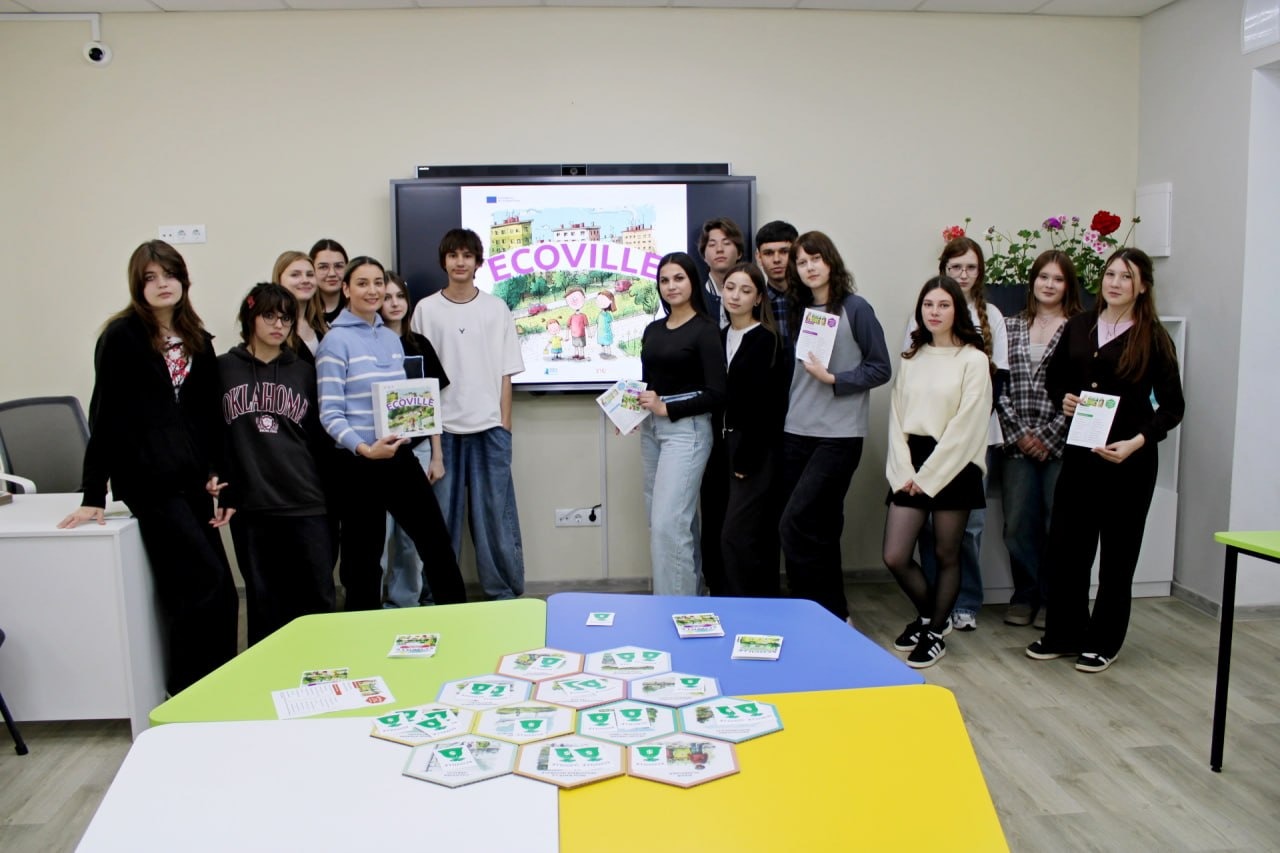
Students and young people from ten communities across the Republic of Moldova explored these questions through EcoVille, an educational game that turns local governance, civic participation, and environmental protection into an interactive learning experience.
The activities were organized within the project “Cross-Border Civic Resilience Through Gamified Democratic Education for Youth”, implemented in the Republic of Moldova and Armenia and funded by the Ministry for Foreign Affairs of Sweden and the German Marshall Fund of the United States. The project aims to strengthen young people’s democratic resilience and civic participation through game-based educational tools, capacity-building for teachers and youth workers, and cooperation between young people from the two countries.
From training educators to local activities
Before the game reached the students, 10 teachers, civil society representatives, and youth workers from Edineț, Taraclia, Criuleni, Ialoveni, Sîngerei, Leova, Fălești, Dubăsari, and Cahul districts took part in a training dedicated to gamified democratic education.
Participants tested the game, explored ways to integrate it into educational activities, and discussed how to facilitate debates, conduct post-game reflection, and support young people in turning ideas into civic initiatives.
The project model invests in the capacity of teachers and youth workers to use educational tools independently. Each selected organization received EcoVille game sets and facilitation materials, allowing the activities to be replicated and extended to new groups of young people.
The game was subsequently organized in educational institutions, youth centres, and community organizations across 10 locations and districts in the Republic of Moldova:
- Cărbuna Gymnasium, Ialoveni district;
- “Aripi de Viață” Public Association, Edineț district;
- “Dimitrie Cantemir” Gymnasium-Kindergarten, Taraclia district;
- Cruglic Theoretical Lyceum, Criuleni district;
- “A. Agapie” Theoretical Lyceum, Sîngerei district;
- Leova branch of the National Youth Platform for Active Participation, with activities in the town of Iargara;
- “Eternitate” Association of Parents of Persons with Disabilities, Fălești district;
- “A. Pushkin” Theoretical Lyceum, Fălești district;
- Ustia Youth Centre, Dubăsari district;
- “M. Sadoveanu” Theoretical Lyceum, Cahul district.
Students became local councillors and community leaders
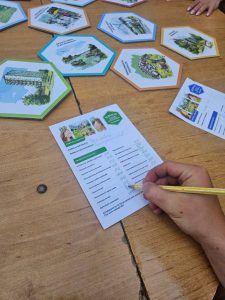
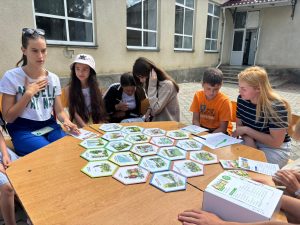
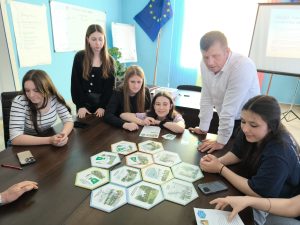
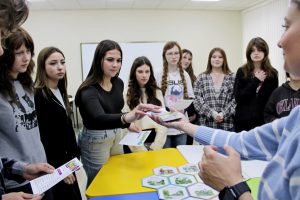
During the EcoVille sessions, young people managed limited resources, debated community issues, negotiated budget allocations, formed alliances, and voted on decisions affecting residents’ well-being and environmental protection. The objective is to build a balanced town in which community development does not come at the expense of the environment.
The themes addressed closely reflect the realities communities face: renewable energy, waste collection and recycling, reducing plastic consumption, water management, sustainable public transport, green spaces, biodiversity, air quality, and resilience to natural disasters.
The activities emphasized collaboration, argumentation, and team-based decision-making. Participants learned that different priorities do not necessarily have to lead to deadlock, but they do require dialogue, negotiation, and a willingness to build common solutions.
When a game becomes a starting point for action
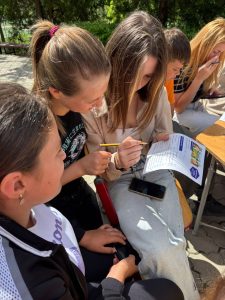
EcoVille goes beyond simulating decisions. The game creates a context in which young people can identify real problems in their school or community and begin developing possible solutions.
Following the activities, participants discussed ideas such as separate waste collection, reducing plastic use, developing green spaces, and promoting environmentally responsible behaviour. In some institutions, teams were formed and began working on concrete initiatives and action plans.
This connection between learning and action is one of the project’s central components. The activities do not stop at building knowledge; they encourage young people to identify local needs, develop ideas, and take an active role in their communities.
What comes next?
The young people involved in the local activities will continue working on ideas and action plans addressing concrete needs in their communities. Teams from the Republic of Moldova and Armenia will take part in a Cross-Border Civic Marathon, where they will exchange experiences and present their solutions.
Overall, the project foresees the development of 20 action plans, ten in each country. Six initiatives—three from the Republic of Moldova and three from Armenia—will be selected and supported for implementation, including through mentoring.
The project “Cross-Border Civic Resilience Through Gamified Democratic Education for Youth” is coordinated by the Center for Research and Advocacy in European Affairs – CAREP, in partnership with Armavir Development Center in Armenia.
The project is implemented with the financial support of the Ministry for Foreign Affairs of Sweden and the Black Sea Trust for Regional Cooperation, a program of the German Marshall Fund of the United States. Responsibility for the content of the project lies solely with the implementing organizations and does not necessarily reflect the views of the Ministry for Foreign Affairs of Sweden or the German Marshall Fund of the United States.