

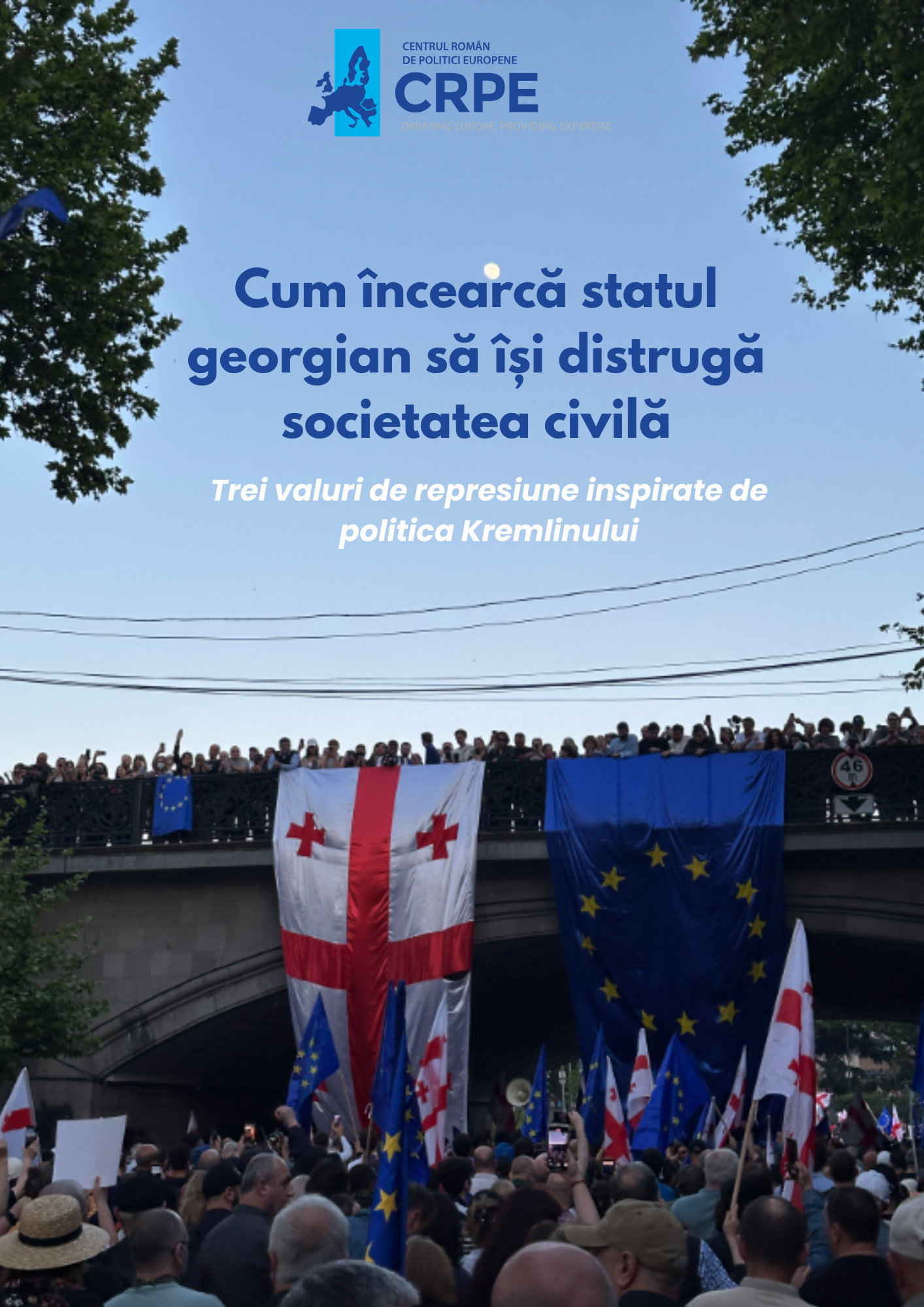
How legislation became a tool for controlling civil society in Georgia
In less than two years, Georgia has adopted a set of laws so restrictive toward civil society that not only the work of non-governmental organizations has been severely affected, but also fundamental rights such as freedom of expression, freedom of association, and participation in public life have, in practice, become almost exclusively a prerogative of the state. What began in 2023–2024 as an attempt to control NGOs, the media, and internet providers through the so-called Law on Transparency of Foreign Influence quickly turned into a broader process of shrinking civic space. In 2025 and 2026, two successive waves of legislative measures significantly expanded these restrictions.
The result is an environment in which hundreds of civil society organizations have been closed or have suspended their activity, and civic participation can lead to severe sanctions—from substantial fines to arrests and prison sentences.
Stigmatizing civil society and controlling funding
One of the main strategies used by the Georgian state has been the stigmatization of civil society through the label of “foreign agent.” In practice, this label targets organizations that receive funding from outside the country—a normal practice for NGOs worldwide, especially when participating in European or international programs that already impose strict transparency standards. This label was only the first step. Authorities subsequently claimed the right to decide what types of projects and funding organizations are allowed to accept. Areas such as human rights, gender equality, civic education, the rule of law, and good governance were among the first targeted by restrictions.
At the same time, the state introduced a series of administrative and bureaucratic mechanisms designed to block the activity of organizations: extensive inspections, administrative sanctions, additional reporting obligations, and restrictions on donations or financial transfers from abroad, which are considered “foreign interference.”
The objective of these measures is clear: transforming civil society into a controllable structure devoid of critical voices, following models already seen in countries such as Russia or Belarus.
Expanded restrictions on citizens, media, and the diaspora
The restrictions do not apply only to organizations. In recent years, they have gradually been extended to individuals, the media, the business sector, and even the Georgian diaspora.
New provisions allow authorities to sanction almost any form of “political” expression—a concept defined in extremely vague terms. A social media post, participation in a protest, or involvement in a civic initiative may be interpreted as political activity carried out in the interest of a “foreign agent.”The media is also facing restrictions related to content and sources of funding, while the legislative package adopted in January 2026 extends similar limitations to the business sector.
At the same time, the Georgian diaspora has become another target. Recent amendments to the Electoral Code prohibit the organization of parliamentary elections outside the country, effectively depriving Georgian citizens living abroad of their right to vote. In addition, opportunities for election monitoring by civil society and international organizations have been significantly limited.
Why this is also relevant for Romania
All these changes are being adopted through mechanisms that, formally, appear democratic: laws voted in parliament and seemingly legitimate legislative procedures. In reality, they represent an example of how democratic instruments can be used to restrict fundamental rights and consolidate a system with increasingly autocratic tendencies.
At CRPE, we express our solidarity with civil society in Georgia and wish to raise an alarm. Unfortunately, in the Romanian public space there have also been statements and initiatives—sometimes from representatives of parliamentary parties—that have flirted with the idea of laws inspired by the “foreign agents” model. Georgia’s experience shows how quickly such legislative initiatives can be transformed into mechanisms for restricting civic space and reducing democratic freedoms.
Our full report is available in Romanian language: How the georgian regime is destroing its civil society


